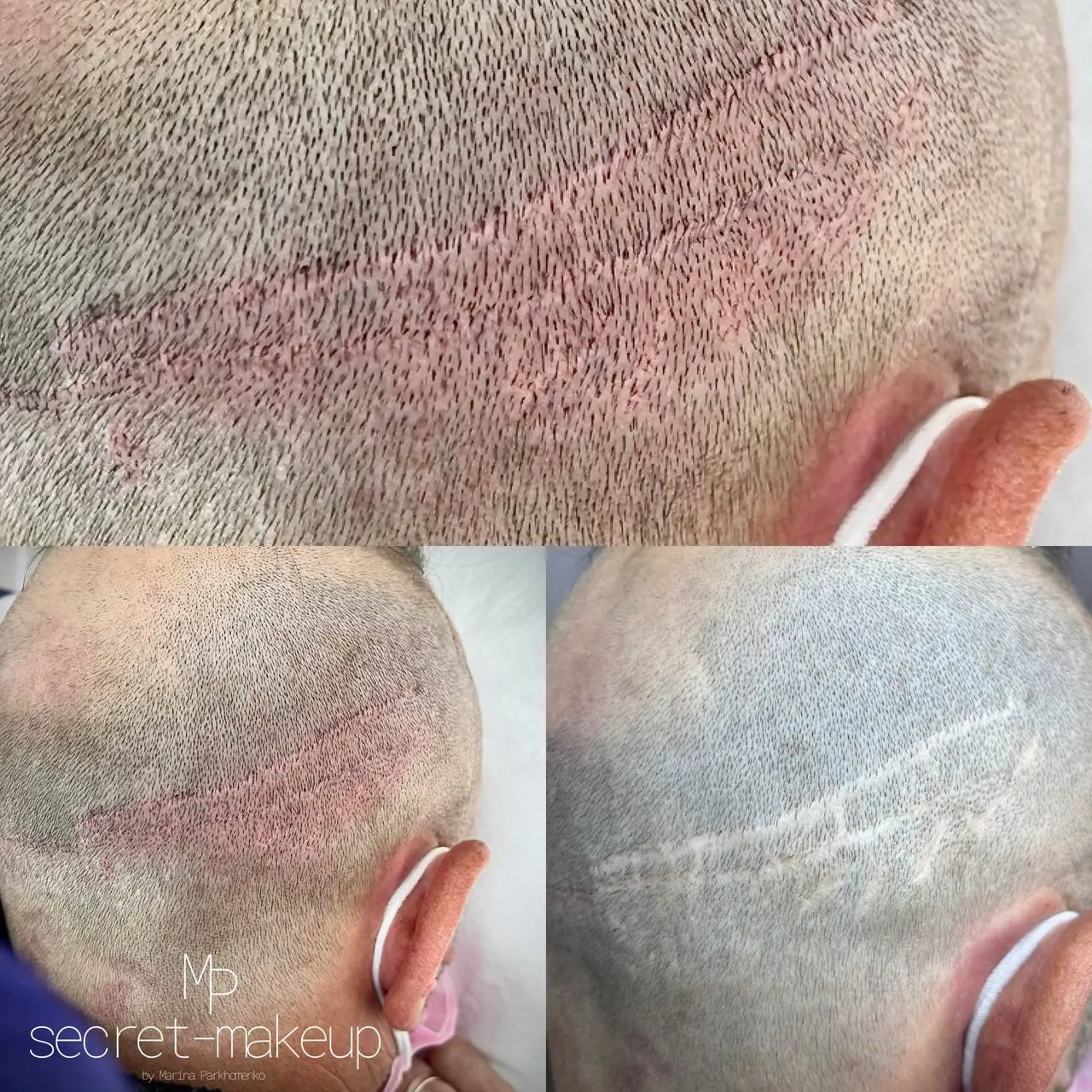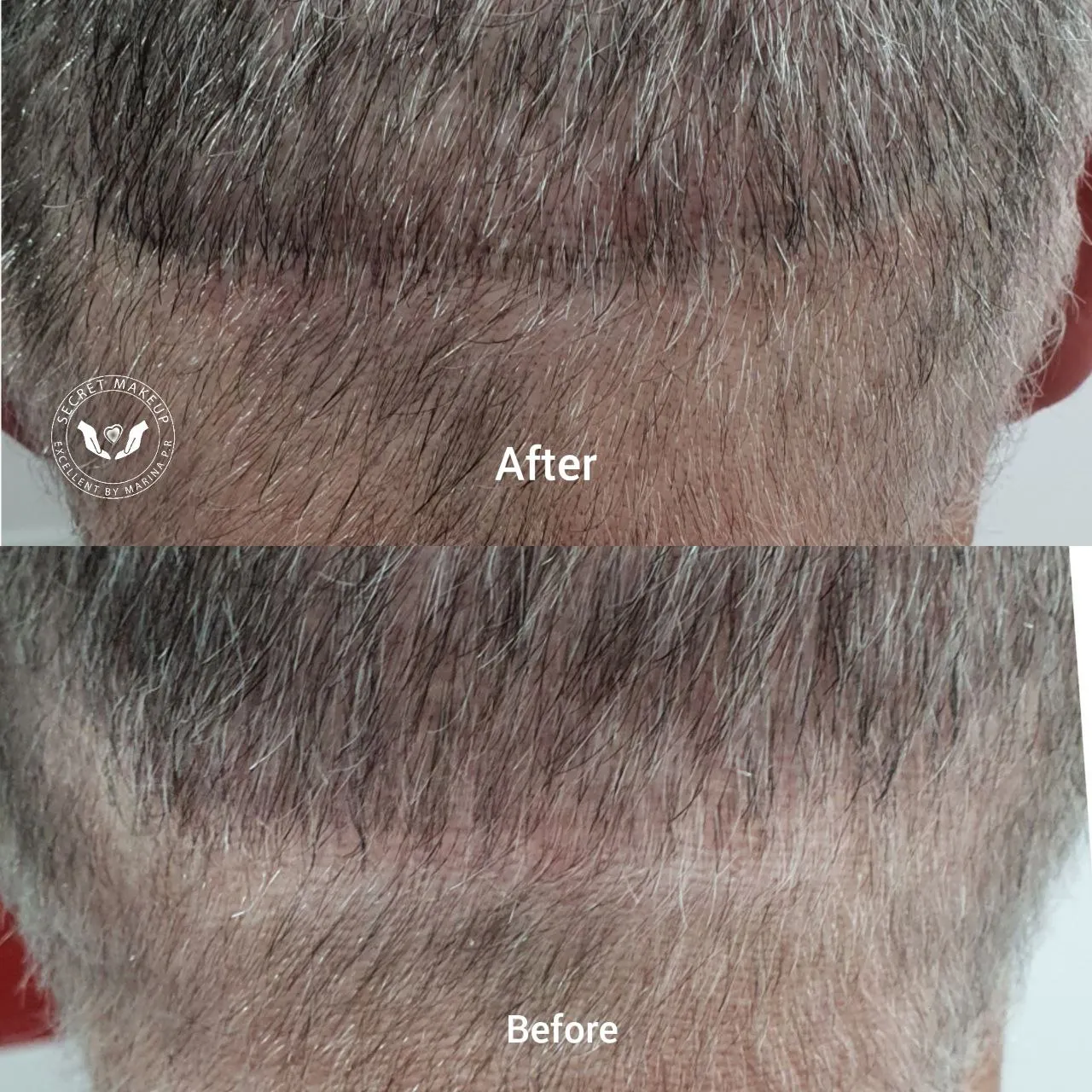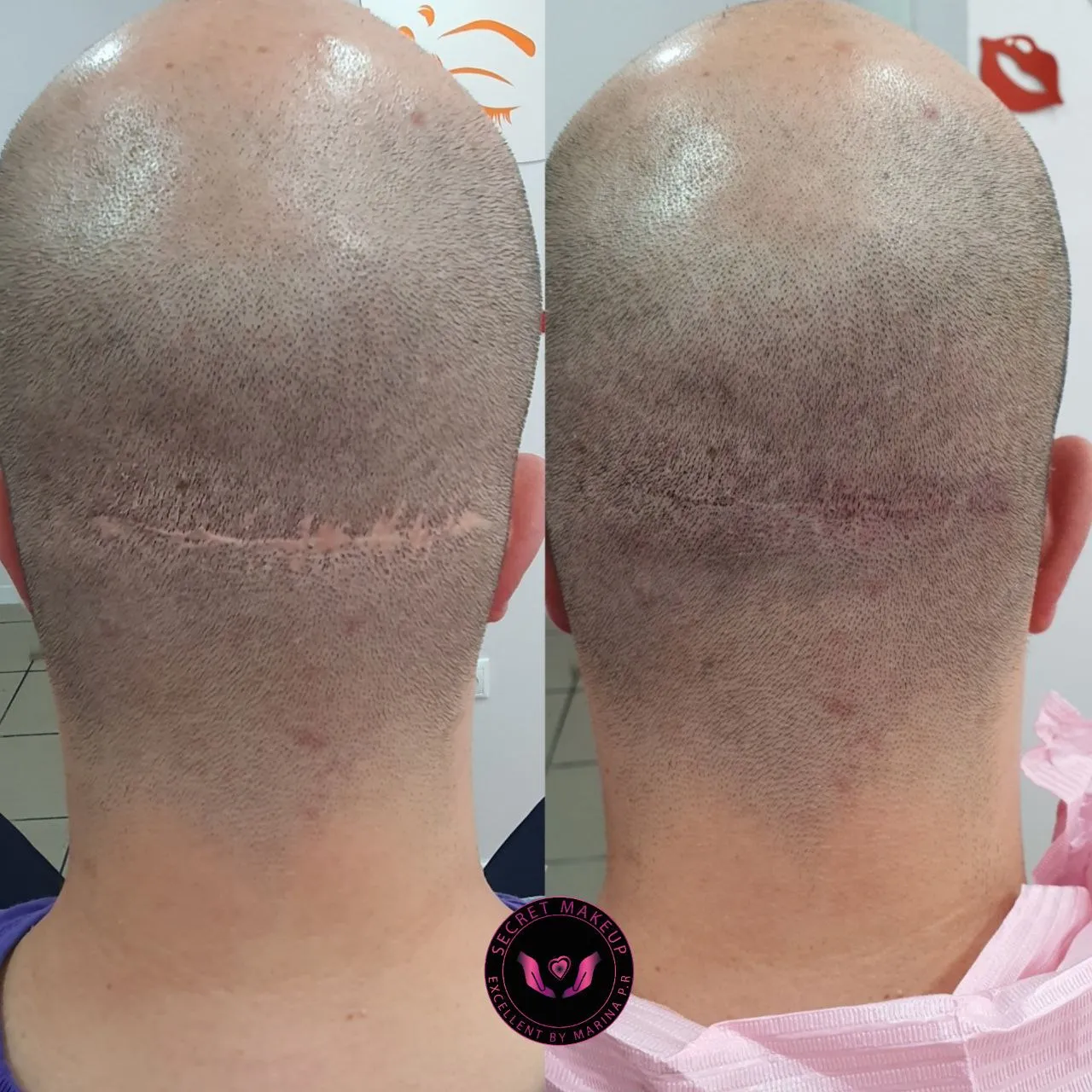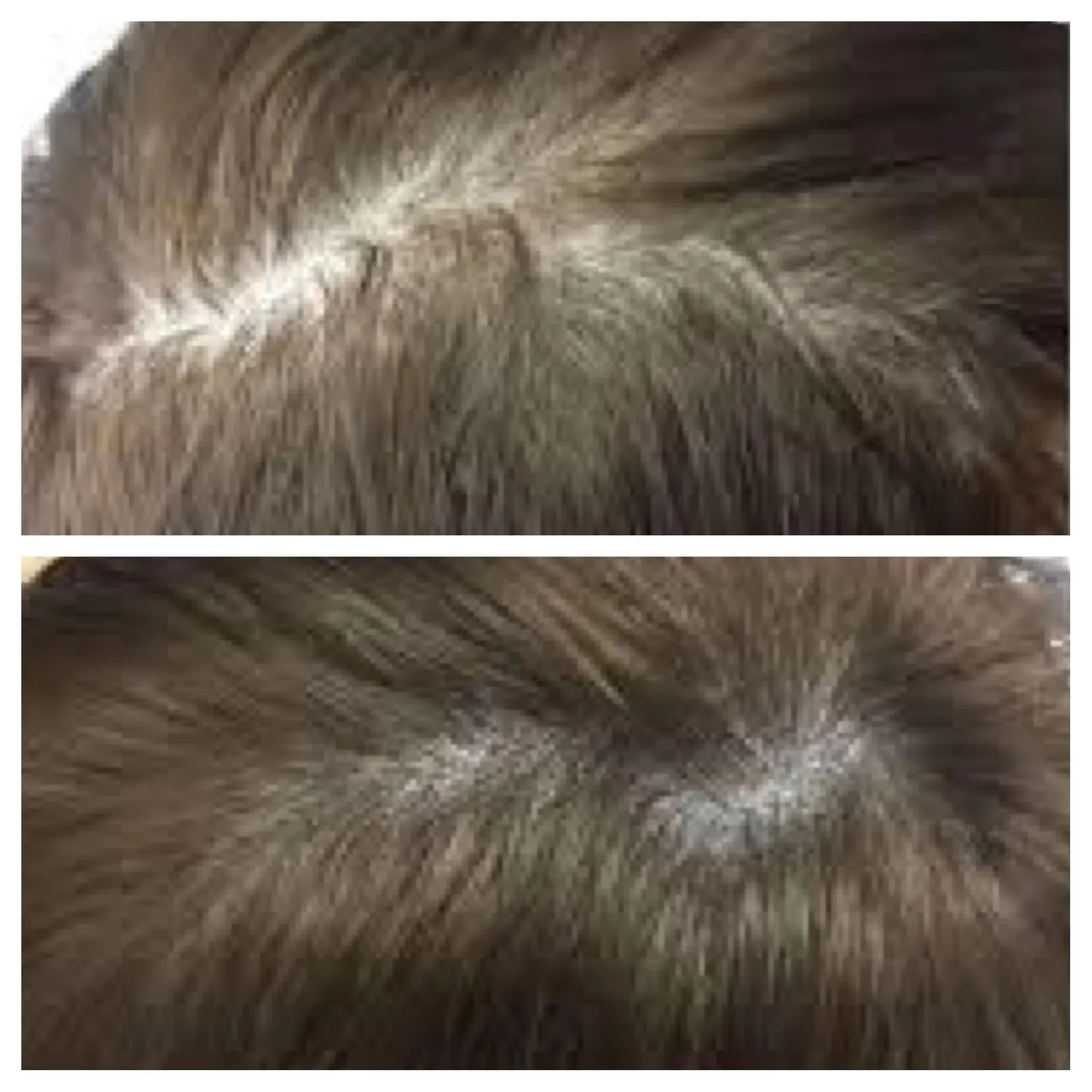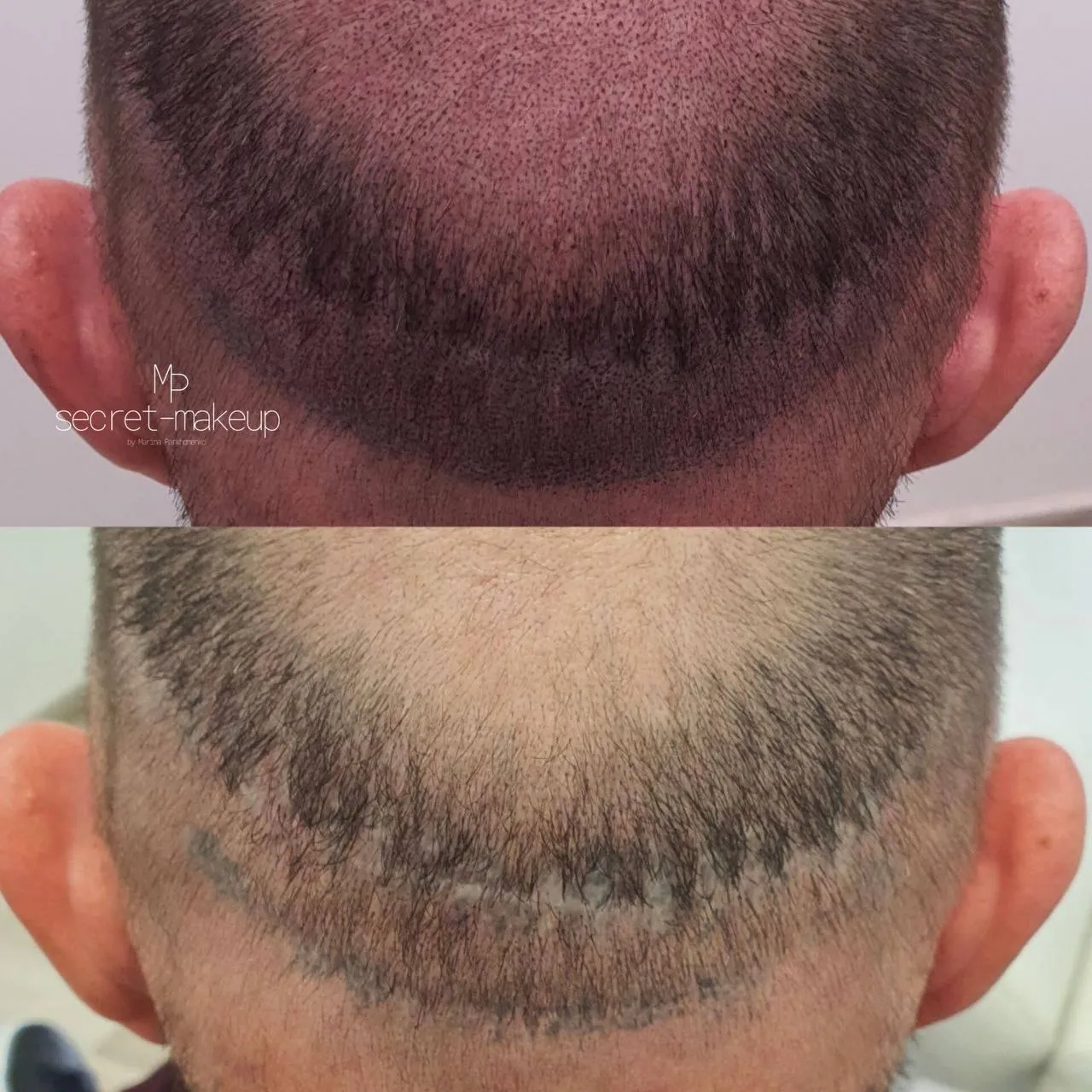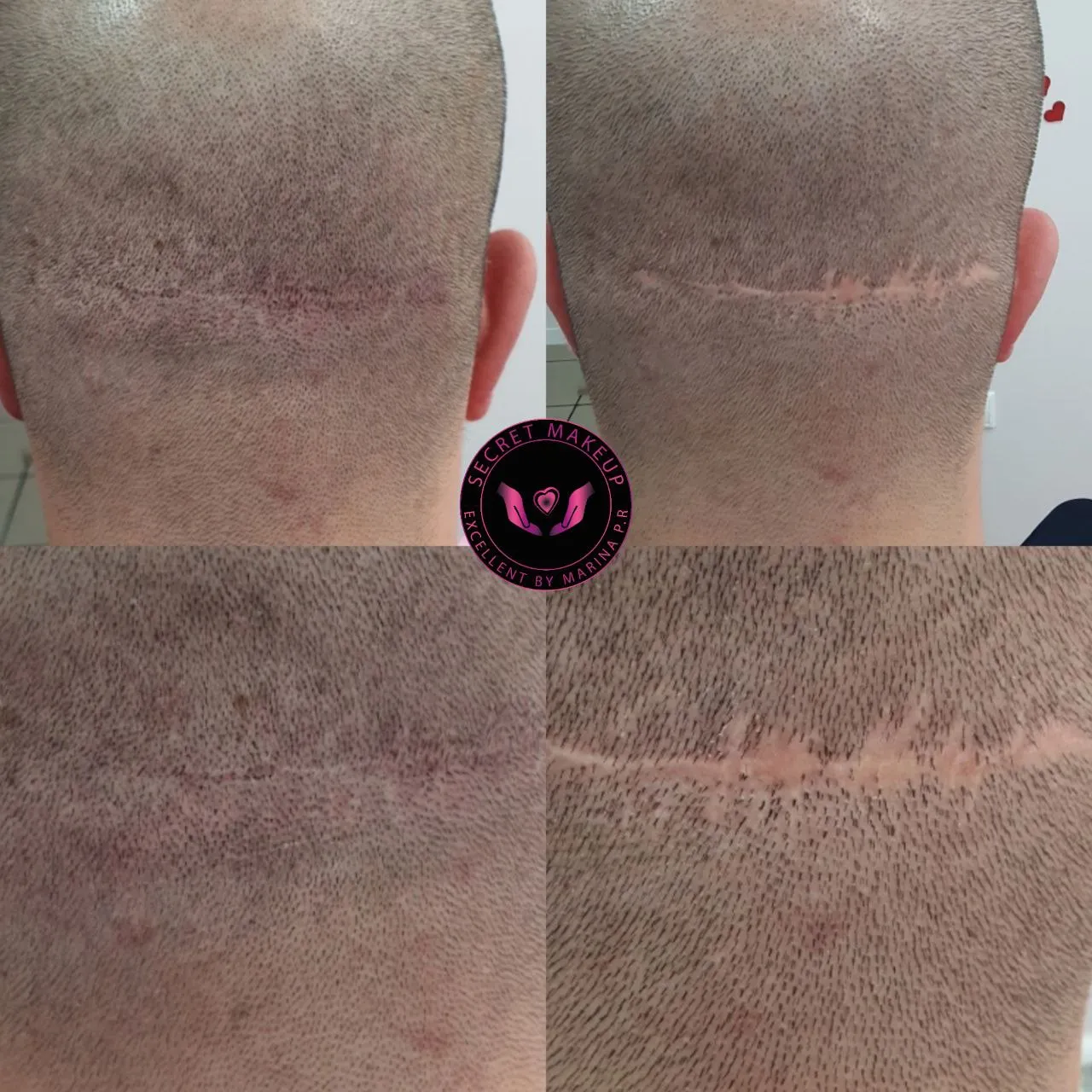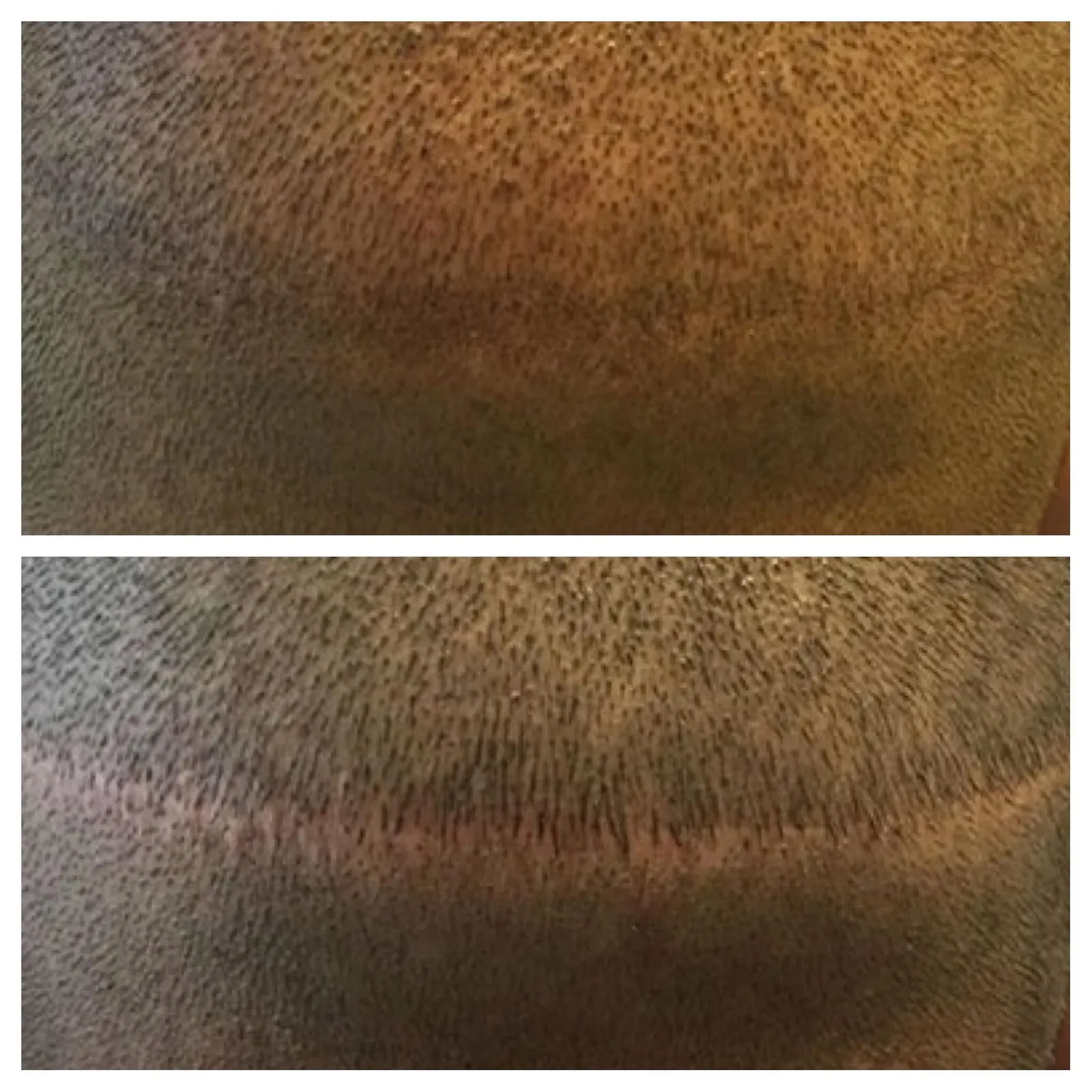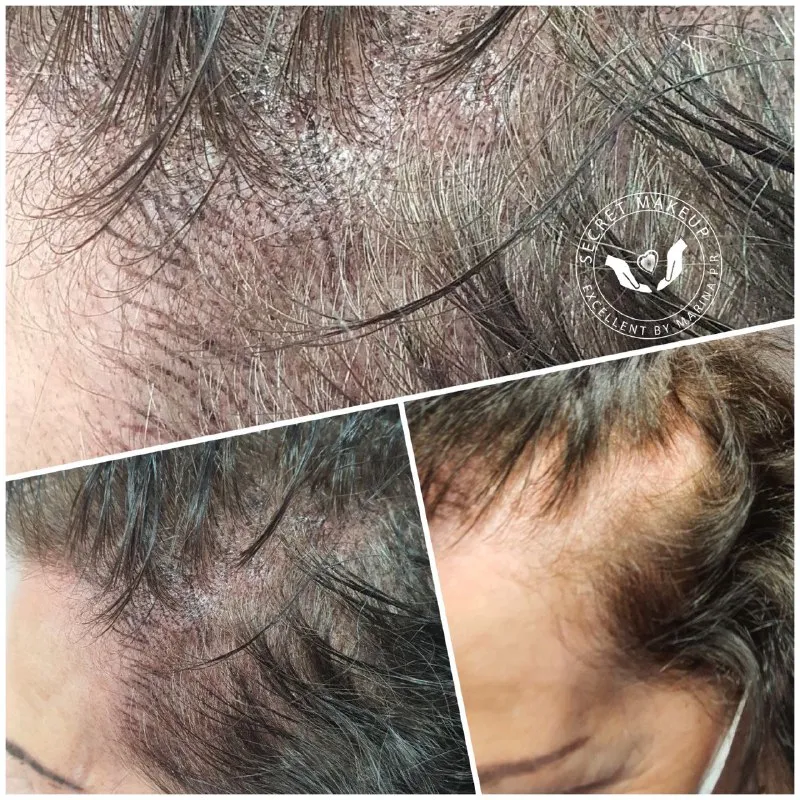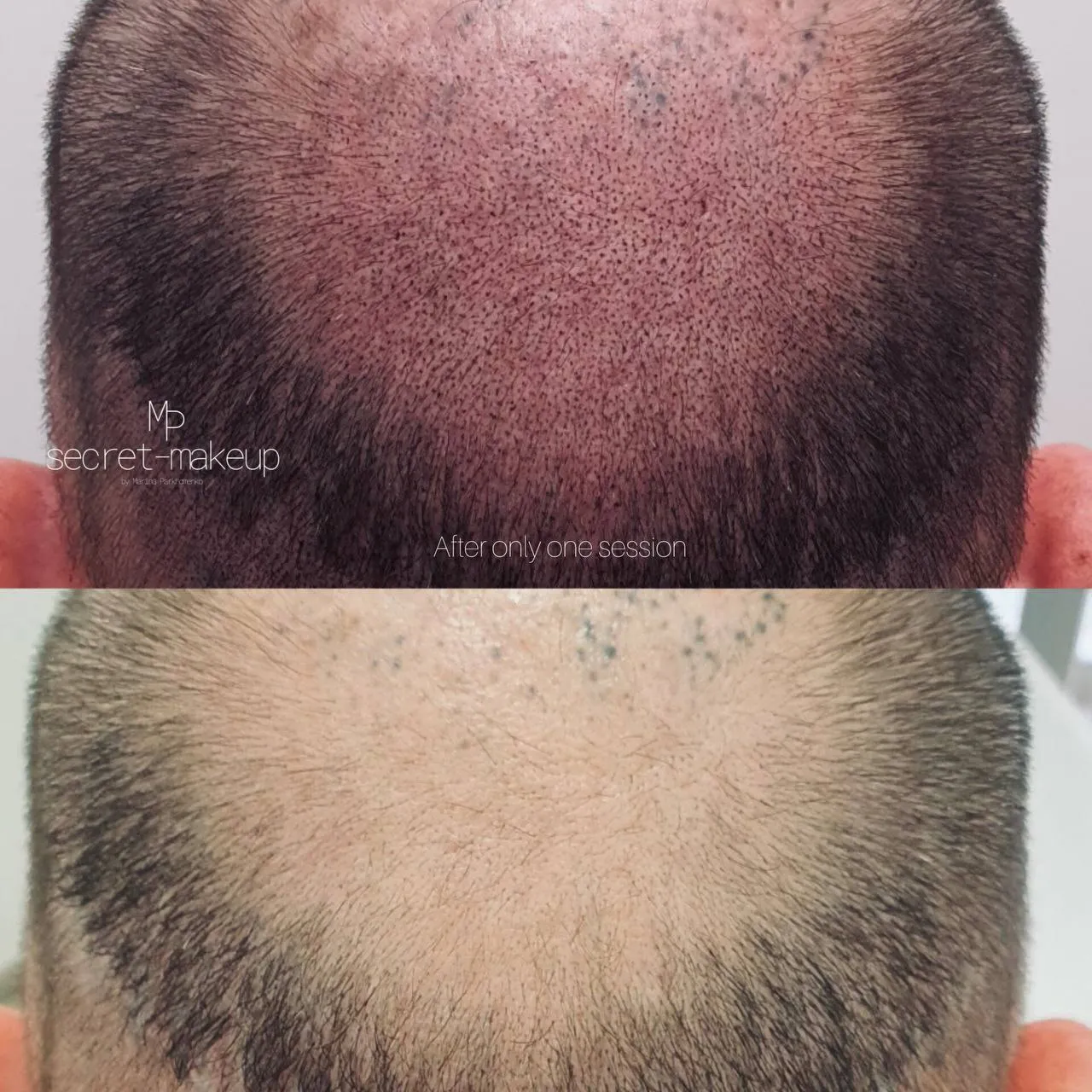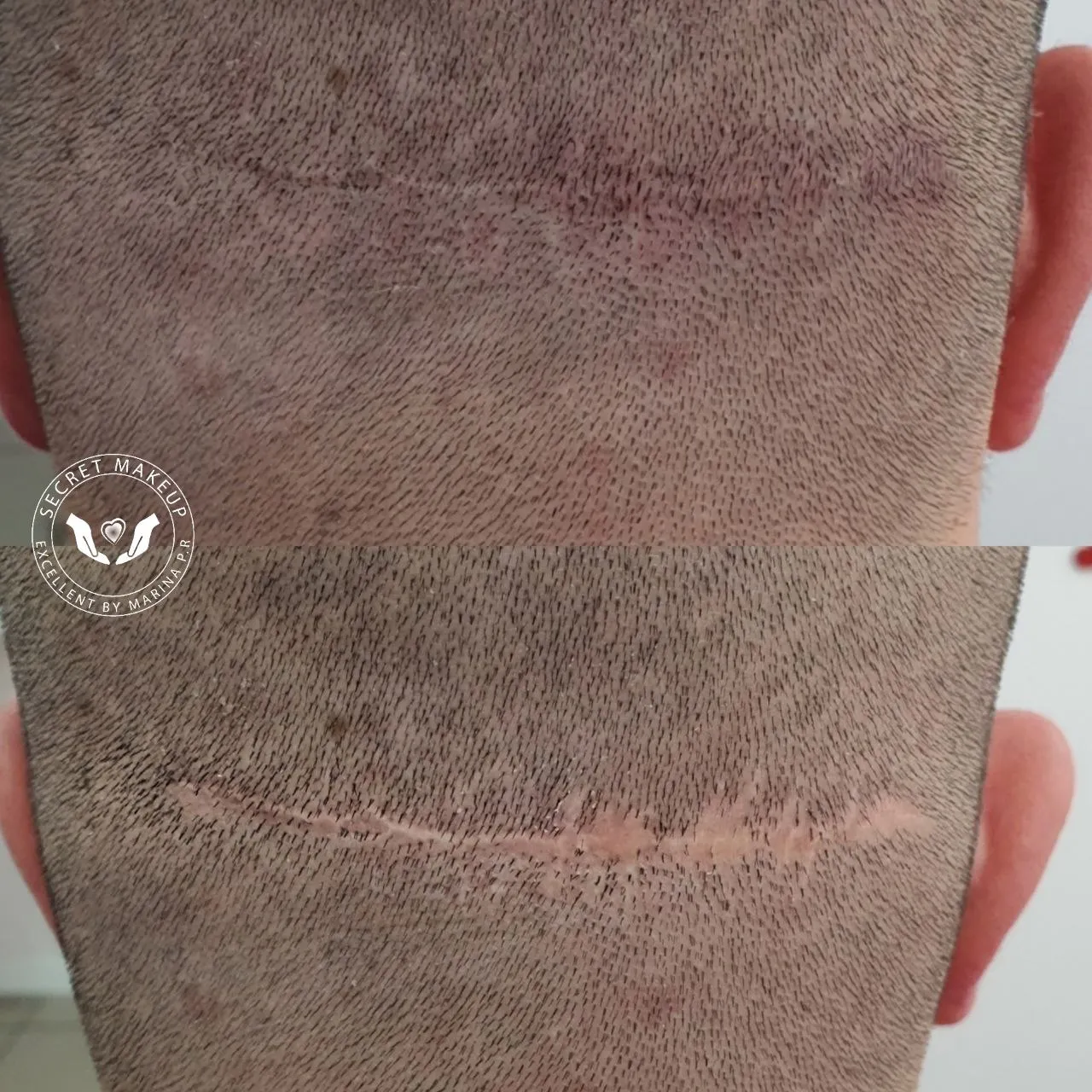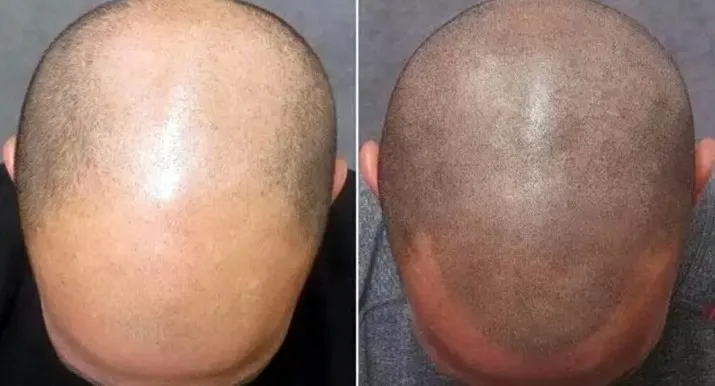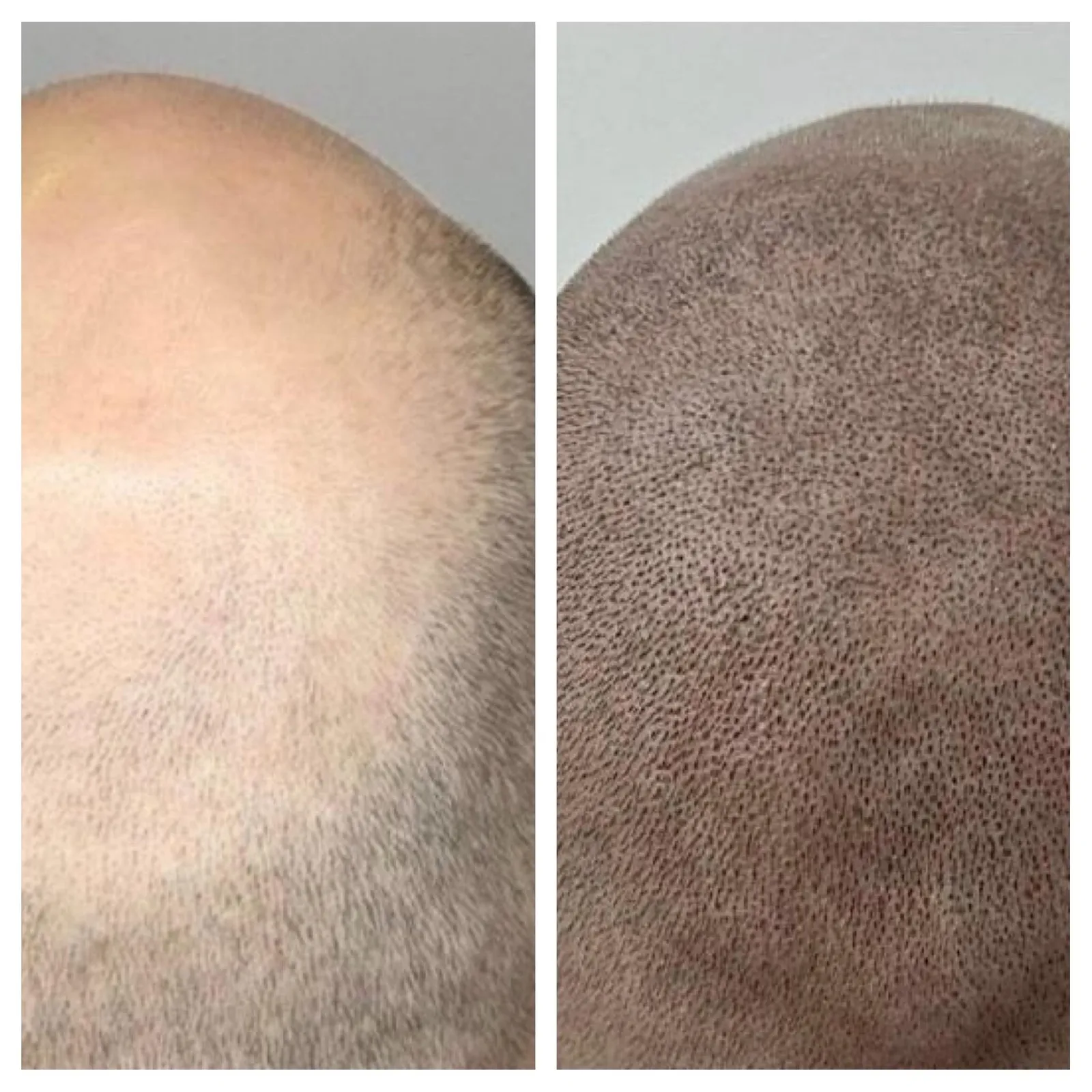

Medical tattooing changes lives! It solves problems such as hair loss, thinning hair, alopecia, scars and post-surgical scars on the scalp.
With the help of micropigmentation, you can correct your hairline, make fine and thinning hair look visually thicker, and conceal scars on the scalp (including those left after hair transplant surgery or a facelift).
Scalp pigmentation, also known as trichopigmentation, is a solution for men and women who suffer from hair loss, thinning hair, alopecia or scars on the scalp.
When is scalp pigmentation needed?
- Baldness
- After a hair transplant
- Camouflaging post-surgical scars (after a facelift)
- Scars from accidents and partial alopecia (baldness)
- Alopecia
What are the results of trichopigmentation?
The result is always impressive and realistic, and gives the look of a shaved head.
Micropigmentation has helped thousands of people around the world who suffer from hair loss to have a modern, well-groomed and youthful appearance, regardless of the degree of hair loss on different parts of the head or face (beard and moustache).
Scalp pigmentation will make your life more successful. You will forget the problem of baldness, which may have haunted you all these years.
• You will smile more often and your mood will lift.
• Your confidence and self-esteem will rise.
• You will live fully and successfully, and that is happiness!
What exactly is medical tattooing – scalp pigmentation?
Trichopigmentation of the scalp (the skin of the skull) or of the beard and moustache area is a new method that was officially registered in 2008 as scalp pigmentation (SMP). The technique was developed by the Italian semi-permanent makeup specialists Tony Belfato and Ennio Orsini.
The pigment is implanted into the upper layers of the skin with a very fine nano needle, using a special method called “Tricopigmentation” (the name it was given in Italy), to cover hair loss.
Of course, this is not a cure, but a kind of “hair illusion”. The drawn hairs look as natural as possible, effectively covering minor imperfections. Scalp pigmentation is a solution for men and women not only in cases of visible hair loss, but also if they wish to significantly increase the density of their existing hair.
Which techniques are used?
The scalp pigmentation technique allows us to draw tiny, randomly placed dots on the skin (to avoid an “artificial” look) that create the appearance of slightly regrown hair. This dot-by-dot technique is usually used on male skin.
On female skin, the hair-stroke technique (tiny strokes that resemble hairs) is usually used to create the illusion of hair. The lines are very fine and uniform.
For a perfect result, we use needles created specifically for working on fine scalp hair.
Scalp pigmentation or medical tattooing also has contraindications:
- When the body tends to form keloid scars
- Serious heart conditions
- Epilepsy
- AIDS
- Skin conditions during a flare-up
- Diabetes mellitus (only with permission from your doctor)
- Respiratory infections
- During chemotherapy and radiotherapy
- Pregnancy
- Micropigmentation is not recommended during intense hair loss; the symptoms of hair loss must have settled, otherwise the hair loss will worsen.
- Trichopigmentation cannot be performed on blond, light red and grey hair (if more than 40% of the hair is grey).
Preparation.
First, the client chooses the pigment colour together with the specialist. As a rule, tests are carried out – a colour test and an allergy test, even though a reaction to a pigment is an extremely rare occurrence. A colour test is also needed because the healed colour result equals the shade of the pigment used combined with the colour of your own skin.
What pigments do we use in medical tattooing?
We use special pigments made for application on the scalp. They are organic, semi-permanent and high quality, from reputable European companies, and are produced under the strict rules of European legislation (Biotek, Swiss Color, Nouveau Contour).
Scalp pigmentation or medical tattooing can only be performed if the scalp is free of inflammation. It must not have rashes, irritation or sunburn. On the day before the procedure, it is not recommended to smoke, drink coffee or alcohol, or take blood thinners.
How is the procedure carried out and how long does it take?
You will be seated comfortably in professional equipment (a chair-bed), listening to pleasant music.
Micropigmentation requires patience, as a session can last from two up to four hours. Depending on how large the bald (or thinning) area is, the client may need from two to six trichopigmentation sessions, with an interval of ten to fifteen days between sessions.
Does medical tattooing hurt?
The procedure is not painful; it may cause only slight discomfort, in which case a topical anaesthetic cream is used. There are few nerve endings on the scalp, so trichopigmentation – scalp pigmentation usually does not require anaesthesia.
The fine needle used to apply the pigment will create a sensation similar to an acupuncture session.
What result does medical tattooing give?
The final result of medical tattooing gives a visual increase in hair density of 2.5 times the original.
In addition, many clients cannot tell where their own hair growth zone ends and where the scalp pigmentation begins. The result looks realistic even on close inspection.
After medical tattooing, can I immediately go out in the sun, exercise and carry on going to work?
The treatment does not disrupt your usual rhythm of life. After medical tattooing, the skin at the pigment implantation site may peel and turn red for a while. During the first days, the pigment colour will look slightly darker – there is no need to worry, this is natural and will soon pass. Once the skin stops peeling (after 7-10 days), the pigment colour will become noticeably lighter, and we will then be ready to do the next session.
What should I watch out for, are there side effects? Is any special care needed after medical tattooing?
No special care is required; the instructions are simple:
After the procedure, it is not recommended to wash your hair for three days. You should avoid direct sun exposure of the scalp for at least two weeks. Scalp pigmentation has no side effects such as scarring and hair loss, but it does require following certain rules. Three months after the procedure, the specialist may suggest a touch-up to correct some details, if there are any.
How long does the result last?
The effect of scalp pigmentation does not last a lifetime, but it can please the client for about one to three years. Nevertheless, in the meantime a touch-up may be needed to keep the colour fresh.
Scalp pigmentation can be carried out in combination with a hair loss treatment.
What are the benefits of medical tattooing – scalp pigmentation?
1. There are no health risks.
2. There is no recovery period.
3. The pigment is implanted into the upper layer of the skin, so the skin is not greatly traumatised. Your hair is not damaged. During trichopigmentation, the needle that delivers the pigment works in the upper layers of the skin and does not reach the layers where the hair follicle is located.
4. The result is visible immediately after the procedure.
5. The visual presence of hair on the head will be immediately visible. In addition, the procedure can be tailored to the client’s wishes: for example, a slightly crisper frontal hairline, etc.
6. The possibility of correction
A few years after micropigmentation, you can change the density, add colour intensity, etc.
MRI scan:
If you have an MRI scan, you must inform the radiologist, because the tattoo appears as an artefact in the imaging.
I love what I do very much, and I do it with impeccable professionalism and with all my heart.
If I can help you, give me a call. I will be glad to answer any questions you may have!
I look forward to welcoming you to my studio with love.